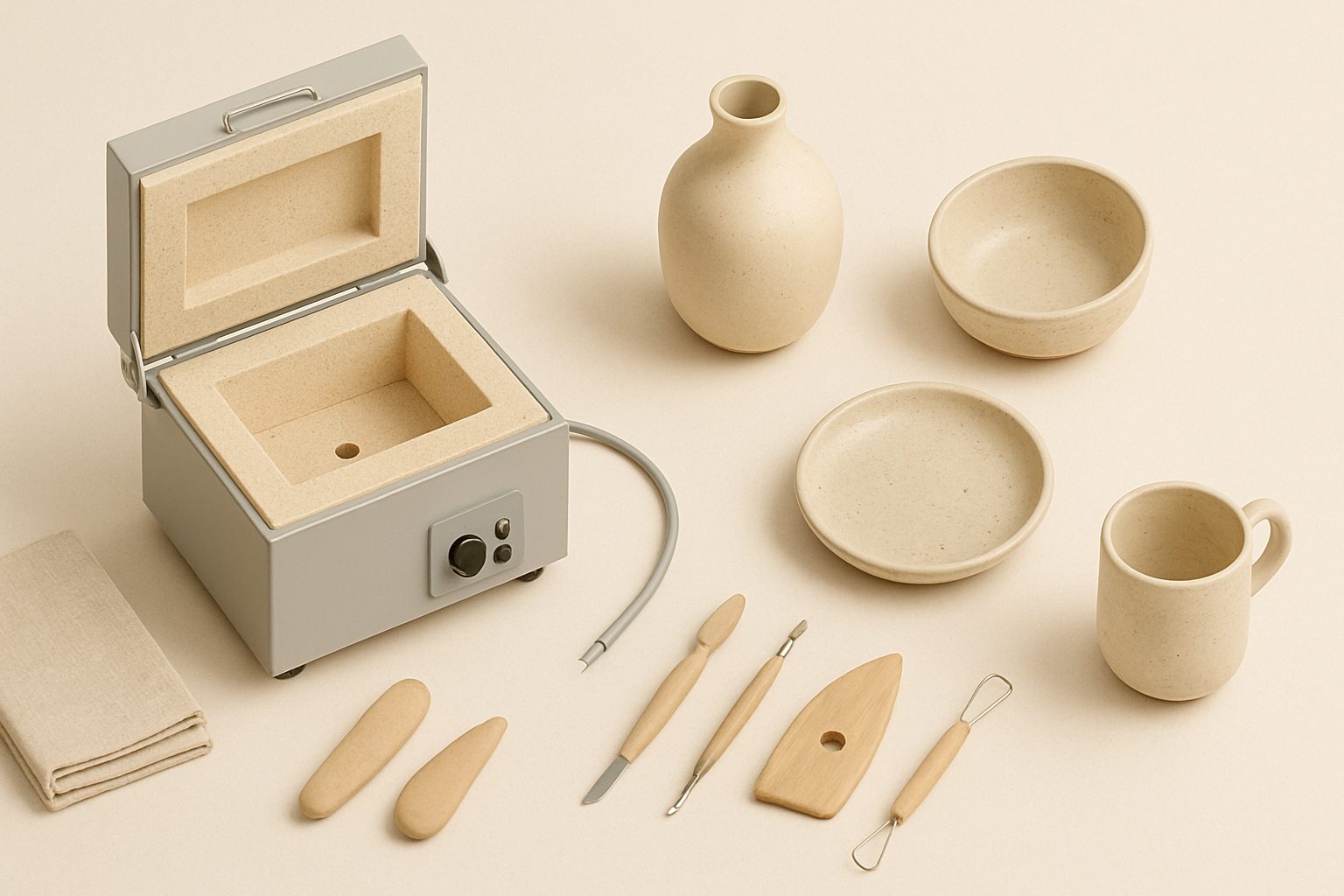
Home Kiln Setup Cost Breakdown UK – What Will It Really Cost You in 2025?
Setting up a pottery kiln at home sounds straightforward until you start adding things up. The kiln itself is only part of the equation. Electrical upgrades, kiln furniture, ventilation, and insurance all contribute to a setup cost that often surprises newcomers. This breakdown walks you through what you'll actually spend to get a functional home kiln, without the guesswork.
The Kiln Itself
A new kiln is the largest single expense, and prices vary significantly based on type and size.
Electric kilns are the most popular choice for home potters. A small tabletop model (around 40–60 litres) costs between £800 and £1,500. Mid-range models (80–120 litres) sit at £1,500–£3,000. Larger studio kilns (150+ litres) push towards £4,000–£6,000+. These prices are for new units from established UK suppliers.
Gas kilns tend to cost less upfront—often £1,000–£3,500 for a functional unit—but they require different infrastructure (gas supply, outdoor placement). They're less common for domestic setups because of space and ventilation demands.
Secondhand kilns can save 30–50%, but inspect thoroughly. Check that elements (in electric kilns) aren't severely deteriorated, and verify the kiln heats evenly. A broken kiln is not a bargain.
Electrical Installation and Part P Compliance
This is where many potters get a shock. Electric kilns draw serious power. Most domestic setups need a dedicated circuit; many need an upgraded consumer unit or a new supply altogether.
Part P of Building Regulations covers electrical safety. Any new circuit for a kiln must be installed by a Part P-certified electrician. Costs typically run £400–£1,200, depending on:
- Distance from your consumer unit to the kiln location
- Whether your existing supply has capacity
- Whether you need a new circuit or can piggyback an existing one
- Your electrician's local rates
Budget £600 as a realistic middle ground. Get quotes from at least two certified installers—prices vary significantly by region.
Some kilns require 32-amp circuits; others manage on 16-amp. Check your kiln's specifications before the electrician visits.
Kiln Furniture and Accessories
Furniture is consumable. Shelves, stilts, and props degrade with use and need replacing every 2–5 years, depending on firing frequency.
Initial setup costs:
- Shelves (3–5 for a typical kiln): £200–£400
- Stilts and props: £100–£200
- Kiln wash: £30–£50
- Thermocouples and plugs: £50–£150
- Safety equipment (heat-resistant gloves, eye protection): £40–£80
Total for furniture and consumables: £420–£880 for your first setup.
Refractory shelves last longer than ceramic ones but cost more (£100+ per shelf). Budget for replacement annually if you fire frequently.
Kiln House or Studio Space Modifications
Most potters install kilns in a garage, shed, or dedicated studio area. The kiln itself takes up floor space—a typical electric kiln footprint is 1.2 × 1.2 metres—but you'll need clearance around it for safety and unloading.
If your space doesn't already exist, a basic garden kiln shed (4 × 3 metres) costs £2,000–£5,000 fully built. If you're converting an existing garage or outbuilding, costs are minimal (maybe £100–£300 for additional shelving and work benches).
Ventilation
Electric kilns release moisture and volatile organic compounds during firing. Proper ventilation isn't optional; it's a health and building safety issue.
Passive ventilation (louvered vents, high and low) costs £50–£150 but only works in mild weather.
Extraction fans (wall-mounted or ducted) cost £150–£500 installed. A 200mm inline fan with ducting typically runs £250–£400. Fit fans near the kiln at a height slightly above it, venting outside.
Your Local Authority building control may inspect the installation if it's a structural change. Expect £100–£200 for inspection fees if required.
Insurance
Standard household contents policies don't cover a commercial kiln (yes, even if it's hobby-scale, insurers sometimes class it commercially). Specialist pottery insurance or a craft-specific business policy is advisable.
Expect £80–£200 annually for coverage on kilns under £5,000 value. Get a quote from a specialist insurer like craft or hobby underwriters; they understand the niche better than high-street providers.
Real-World Total
Minimum setup (small electric kiln, secondhand, no electrical upgrades needed):
- Kiln: £600–£800 (secondhand)
- Furniture: £300–£400
- Ventilation: £100
- Installation labour (if needed): £300
- Total: £1,300–£1,600
Typical setup (new mid-range kiln, Part P installation, proper ventilation):
- Kiln: £1,500–£2,500
- Electrical installation: £600
- Furniture: £500–£700
- Ventilation: £250–£400
- Annual insurance: £100–£150
- Total (year one): £3,500–£4,350
Comfortable, well-equipped setup (larger kiln, upgraded space, robust ventilation):
- Kiln: £3,000–£4,000
- Electrical installation: £800–£1,000
- Furniture: £700–£900
- Ventilation system: £400–£600
- Kiln house or conversion: £1,000–£2,000
- Annual insurance: £150–£200
- Total (year one): £6,050–£8,700
Hidden Costs to Consider
Running costs aren't included above. Electricity for firing varies by kiln efficiency, but expect £20–£50 per firing cycle. Kiln furniture replacement (every 1–3 years) costs £150–£300 annually for frequent potters.
The Part P certification is non-negotiable in the UK—cutting corners risks your building insurance claim. Similarly, proper ventilation prevents damp and condensation issues that can damage your studio and health.
Start smaller than you think you need. Most potters upgrade their kilns after 2–3 years anyway, once they've figured out their real workflow. A modest, well-installed first kiln costs less long-term than a sprawling, poorly ventilated setup.
More options
- Electric Ceramic Kilns – Full Range (Amazon UK)
- Programmable Kiln Controllers (Amazon UK)
- Kiln Furniture & Shelves (Amazon UK)
- Kiln Vent & Fume Extraction Systems (Amazon UK)
- Jewellery & Small Specialty Kilns (Amazon UK)