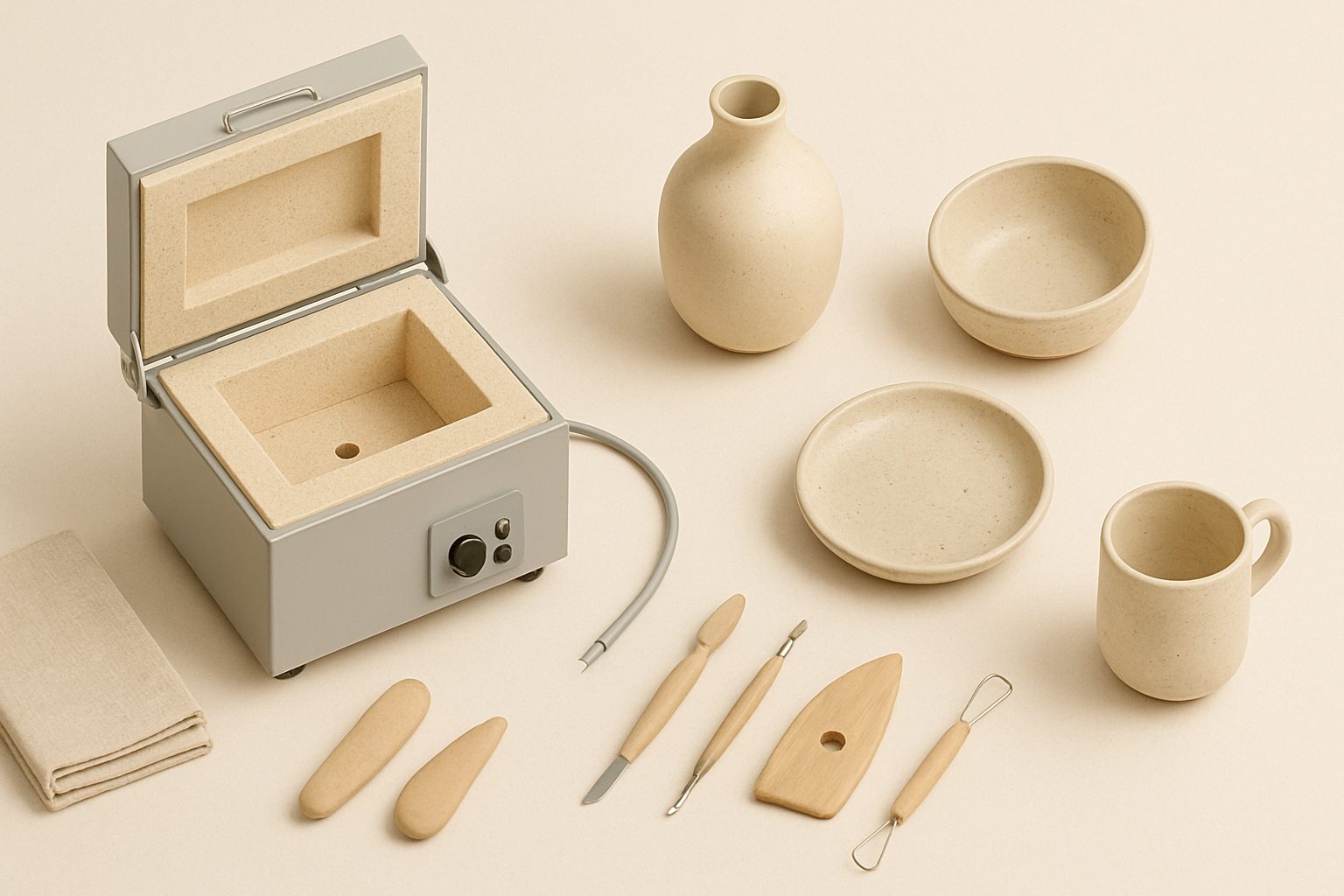
How Much Does a Home Kiln Cost to Run in the UK? Electricity Explained
Running a home ceramic kiln is expensive. The single biggest operating cost isn't materials or equipment maintenance — it's electricity. But the actual cost depends on three things: how much power your kiln draws, how long you fire it, and what you pay per unit of electricity. Get these right, and you can plan properly.
How much electricity does a home kiln use?
A typical domestic kiln draws between 3 kW and 13 kW during firing. A small hobby kiln — say a 0.12 cubic metre front-loader — usually pulls around 3–5 kW. A medium kiln (0.25 cubic metre) typically sits at 7–10 kW. Larger models for serious potters can reach 13 kW or more.
The confusion comes because power draw (kW) isn't the same as energy used (kWh). A kiln running at 5 kW for eight hours uses 40 kWh. A kiln at 10 kW for the same time uses 80 kWh. Many people buy a kiln and are shocked by their first electricity bill because they underestimate firing duration.
A typical bisque fire (raw clay → porous ceramic) takes 8–12 hours. A glaze fire (glazed pieces → finished ware) usually takes 6–10 hours, depending on temperature and kiln model. Add heating-up time, cooling restrictions (you often can't open the kiln immediately), and you're looking at 12–16 hours of electrical draw per firing cycle.
UK electricity rates and what you'll pay
As of early 2025, standard UK household electricity costs around 24–28p per kWh on a typical tariff. This varies by region and supplier, but this is a realistic ballpark. If your kiln draws 8 kW and fires for ten hours, that's 80 kWh. At 26p per unit, one firing cycle costs roughly £20.80.
Most potters fire two to four times per month. That's between £41 and £83 in kiln electricity alone, every month. Over a year, a casual potter might spend £500–£1,000 just running the kiln. If you're serious and firing weekly, double or triple that figure.
Running costs also scale with kiln size and efficiency. Smaller kilns cool faster and lose less heat through walls, so they're cheaper per firing. Older kilns or poorly insulated ones draw more power for longer. A kiln that's 20 years old and heavily used may cost 30–50% more to run than a modern equivalent.
Working out your actual running costs
To calculate your specific costs, you need three numbers: your kiln's power rating (check the specification sheet or the nameplate), your typical firing time, and your current electricity rate.
Formula: (Kiln power in kW) × (Firing hours) × (Your unit rate in £/kWh) = Cost per firing
Example: A 6 kW kiln firing for nine hours, at 26p per kWh:
- 6 × 9 = 54 kWh
- 54 × 0.26 = £14.04 per firing
If you fire twice monthly, that's about £28 per month, or £336 per year.
Your power draw also matters on your home's main circuit breaker. Most UK homes have 60–100 amp services. A 10 kW kiln needs roughly 40 amps at full load. If you're running the kiln while cooking, heating, and using other appliances, you'll overload your circuit. Many potters either upgrade to a dedicated circuit or fire during off-peak hours specifically to avoid this.
Economy 7 and off-peak firing
This is where real savings happen. Some UK suppliers offer Economy 7 or similar time-of-use tariffs. Off-peak hours (typically 11 p.m. to 7 a.m. or 10 p.m. to 8 a.m., depending on your supplier) charge around 8–12p per kWh — roughly a third of peak rates.
If you have the choice, firing overnight or early morning on an Economy 7 tariff transforms the cost. That same 54 kWh firing now costs 54 × 0.10 = £5.40 instead of £14. Over a year, switching to off-peak can save £200–£400 if you fire regularly.
The catch: Economy 7 comes with a slightly higher standing charge, and peak-rate units (daytime) are costlier to discourage use. Some suppliers have replaced Economy 7 with "octopus-style" dynamic tariffs, where rates fluctuate hourly. A few forward-thinking potters have started timing firings to cheap-rate windows — more hassle, but potentially significant savings.
Ways to reduce kiln running costs
Upgrade the insulation. Kiln shelves, brick, and blanket quality matter enormously. Older, brick-based kilns lose more heat than modern high-temperature fibre or ceramic fibre models. Modern kilns fire faster and hold temperature better, reducing overall energy draw.
Fire cooler when possible. Cone 6 (1222°C) uses substantially less energy than cone 10 (1305°C). Some potters switch clay and glaze bodies to suit lower temperatures. You'll lose some aesthetic options, but the operational cost drop is real.
Combine loads. Fire multiple smaller projects instead of one. A half-full kiln still uses almost as much electricity as a full one. Batch your work.
Regular maintenance. Worn elements, cracks in the chamber, and degraded seals all increase energy waste. Replacing kiln elements or repairing insulation pays for itself within a few firings.
Check your tariff. If you fire regularly, Economy 7 or another time-of-use tariff is worth the switch. The savings easily offset the higher standing charge.
The bottom line
Home kiln electricity costs aren't hidden — they're just often underestimated. A modest-sized, regularly-used kiln will add £200–£500 annually to your household bill. That's not unusual or unreasonable, but it's real money worth factoring into your pottery budget. Understanding your kiln's power draw, firing duration, and electricity tariff lets you plan accordingly — and gives you genuine levers to pull if costs creep higher.
More options
- Electric Ceramic Kilns – Full Range (Amazon UK)
- Programmable Kiln Controllers (Amazon UK)
- Kiln Furniture & Shelves (Amazon UK)
- Kiln Vent & Fume Extraction Systems (Amazon UK)
- Jewellery & Small Specialty Kilns (Amazon UK)