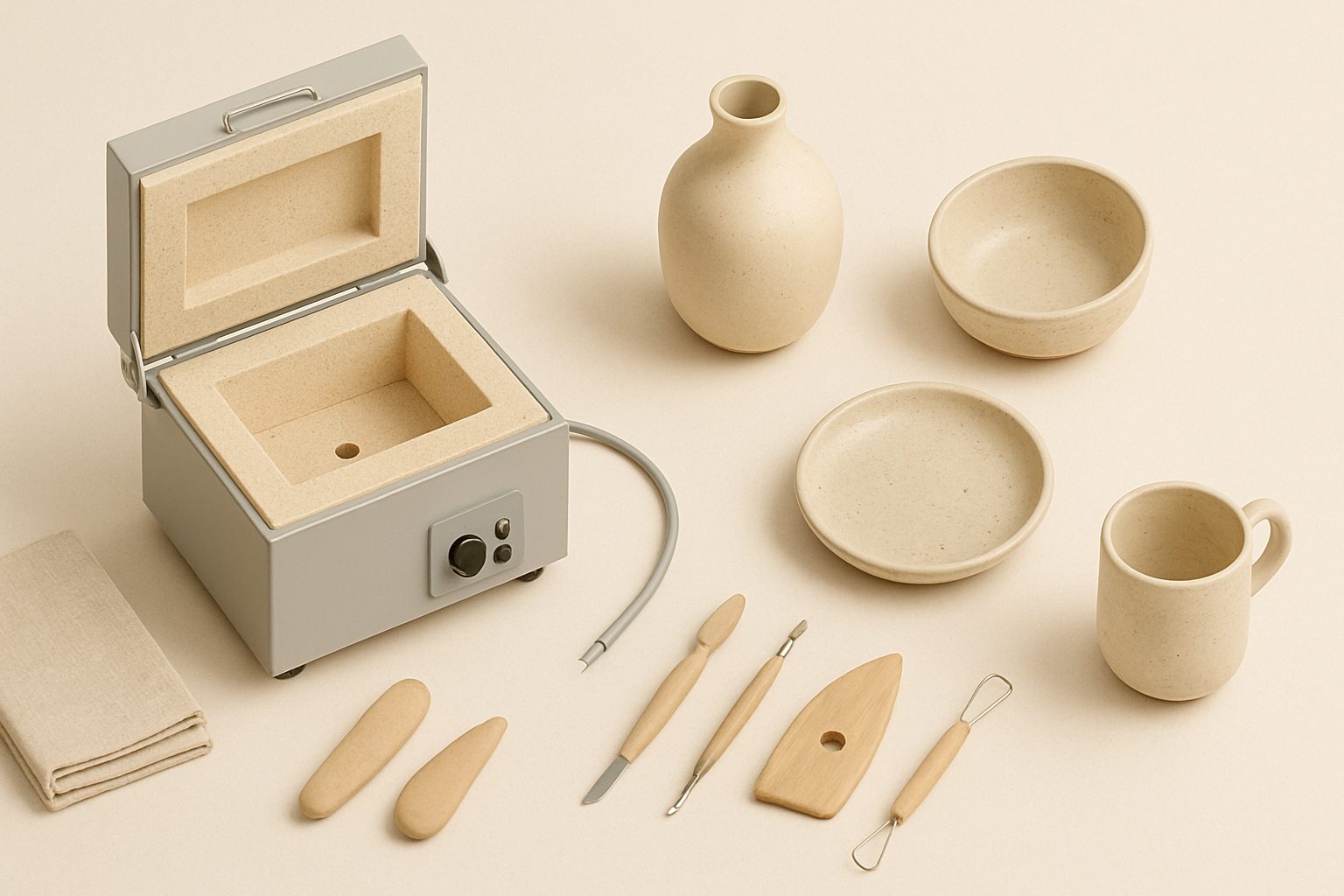
Best Kilns for Firing Stoneware at Home UK – Cone 6 to Cone 10 Models
Firing stoneware at home demands a kiln that can reliably reach and hold temperatures between 1260°C and 1300°C. Unlike earthenware, which matures at cone 04 (around 1060°C), stoneware requires sustained high heat to vitrify properly. The difference between a kiln that reaches temperature and one that maintains it evenly throughout the chamber matters significantly for glaze maturity and clay body development.
When shopping for a stoneware kiln in the UK, two factors immediately narrow your options: temperature capability and element longevity. This guide focuses on kilns genuinely suited to cone 6–10 work, the technical choices that separate reliable performers from cheaper alternatives, and what UK potters actually need to know before buying.
Temperature Requirements: Why 1300°C Matters
Stoneware clays—whether earthstone, porcelain, or mid-range stoneware—begin to vitrify (seal against water penetration) around 1200°C. Full maturity for most commercial UK stoneware bodies sits between 1260°C (cone 6) and 1300°C (cone 10).
A kiln rated to "cone 6" doesn't mean it reaches that temperature only at the peephole. It means the whole chamber achieves cone 6 uniformly enough that work inside matures properly. Many budget electric kilns claim cone 10 capability but struggle with temperature distribution, leaving the back cooler than the front. This matters because undercooked stoneware stays porous and absorbs water—unsuitable for functional ware.
When evaluating kilns, look for kiln manufacturers' published cone-temperature charts or firing trial reports rather than marketing claims alone.
Element Types: Kanthal A1 vs SuperKanthal
The heating element you choose directly affects kiln lifespan and temperature stability.
Kanthal A1 remains the industry standard for good reason. These wire elements are stable to approximately 1400°C and degrade predictably. They're widely stocked in the UK, relatively inexpensive to replace, and perform consistently over thousands of firing hours. Kanthal A1 elements work well for cone 6 work and will handle cone 10 firing, though they'll age faster at the top of that range.
SuperKanthal elements tolerate slightly higher sustained temperatures (around 1425°C) and resist oxidation better in damp studio environments. They cost more—typically 15–25% more than standard Kanthal A1—but offer longer service life if you're firing regularly to cone 10. If you plan to fire fortnightly or weekly, SuperKanthal reduces element replacement frequency from every 400–500 hours (roughly two years at regular use) to 600+ hours.
For most home potters firing stoneware once monthly, Kanthal A1 is sensible. For regular production, SuperKanthal pays for itself.
Kiln Chamber Size and Furniture Demands
Stoneware firing requires robust stilts, shelves and spacers. Unlike earthenware, you cannot fire stoneware pieces directly on kiln shelves—glaze will fuse them permanently.
Shelf requirements: Kiln furniture must withstand cone 10 temperatures without warping. Cordierite shelves (silicon carbide alternatives are overkill for home use) are the standard. You'll typically need 2–4 shelves depending on chamber height. Budget £30–60 per shelf for quality UK-stocked options.
Stilts and spacers: High-fire stoneware requires high-fire stilts. Low-fire stilts will collapse or melt. Three-point stilts rated to cone 10+ are essential; expect to spend £15–25 per piece depending on size.
Many home kilns come with one or two shelves included. If buying second-hand, verify shelf condition—warped or cracked shelves produce uneven firing.
Firing Schedules for UK Stoneware Clays
UK stoneware bodies (whether you're using Potclays, Hyplas, or Scarva formulations) generally respond well to a slow climb to temperature, with a 30–60 minute soak at peak cone.
A typical cone 10 schedule:
- Bisque: 200°C per hour to 1000°C, then 100°C per hour to 1260°C. Total time: 8–10 hours.
- Glaze fire: Same climb, but with a 45-minute hold at cone 10 (1300°C) to allow glaze maturity.
The soak time allows glazes to flux fully and clay bodies to achieve complete vitrification. Rushing to temperature produces underfired, porous ware.
Modern digital kilns with programmable controllers simplify this. Budget models offer basic cone-firing or fixed schedules; mid-range kilns provide full ramp/soak programming. For stoneware, programmability isn't a luxury—it's essential for consistent results.
Practical Buying Considerations
New vs second-hand: Used kilns in the UK often have 10+ years of service remaining if elements are in decent condition and the chamber isn't cracked. Inspect the interior carefully for element degradation (thin, brittle-looking wire) and check that thermocouples are present and functioning. A full element and thermocouple replacement on a used kiln might cost £200–400 but can extend its life another 5+ years.
Power supply: Most home stoneware kilns run on standard 13A domestic supply, but larger chamber models (400+ litre capacity) may require 16A or 32A circuits. Check your home's wiring before purchasing.
Studio environment: Kilns perform best in dry, stable conditions. Damp studios (common in converted garages or workshops) accelerate element corrosion. If your space is humid, factor SuperKanthal elements into your budget.
Warranty and support: UK-based or EU-based kiln manufacturers offer faster repairs and easier spare-parts sourcing. Cheap imports can leave you without support or correct replacement parts if something fails mid-season.
Final Notes
Firing stoneware at home succeeds with a kiln rated honestly to cone 10, honest element specification, and realistic furniture investment. Avoid "bargain" kilns claiming cone 10 capability with budget elements—they'll frustrate you with inconsistent results and rapid deterioration. The difference between a reliable kiln and a problematic one typically amounts to £200–400, easily recouped through consistent, successful firings.
More options
- Electric Ceramic Kilns – Full Range (Amazon UK)
- Programmable Kiln Controllers (Amazon UK)
- Kiln Furniture & Shelves (Amazon UK)
- Kiln Vent & Fume Extraction Systems (Amazon UK)
- Jewellery & Small Specialty Kilns (Amazon UK)