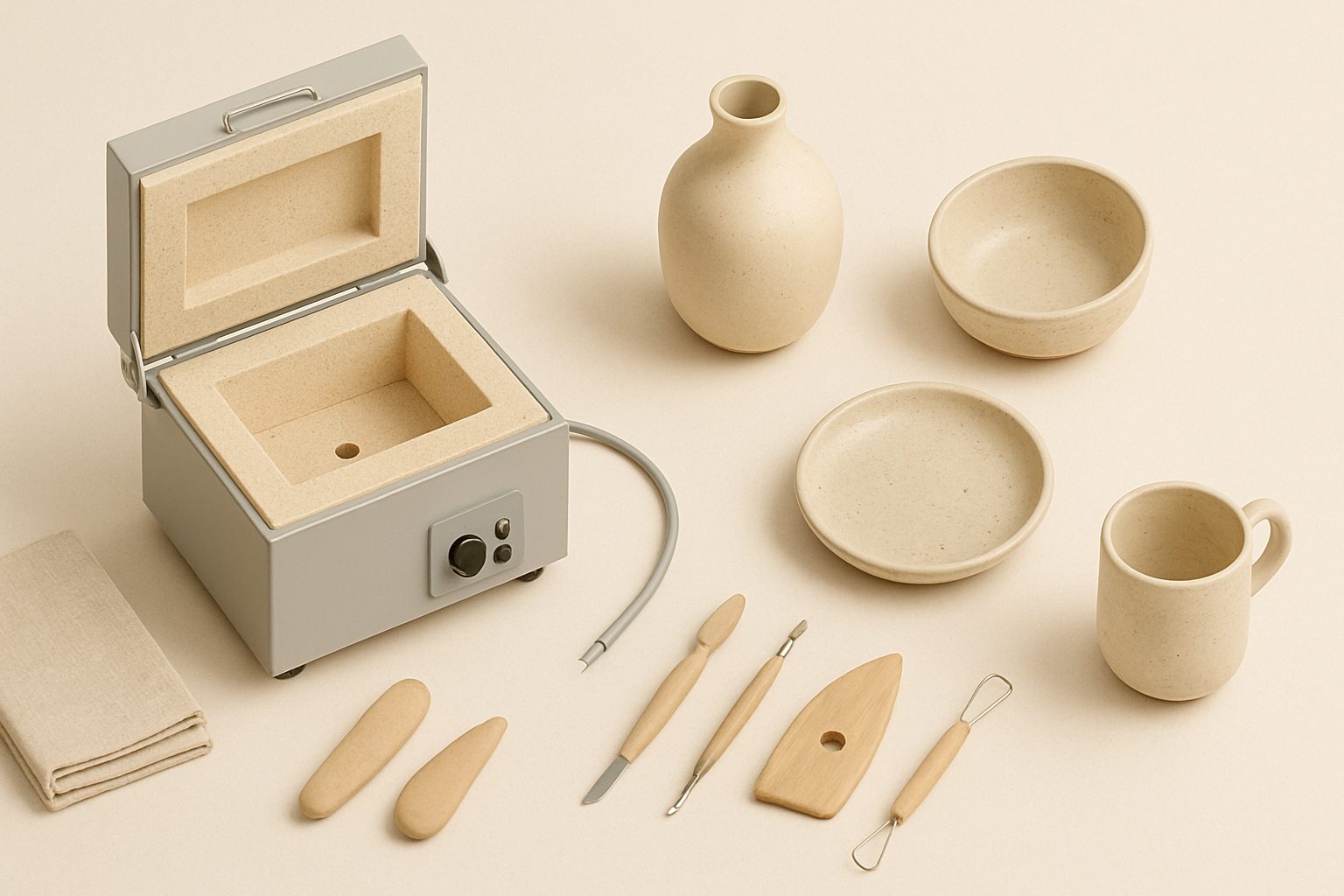
Best Home Ceramic Kilns for Beginners in the UK (2025 Reviews)
If you've finished a pottery course and want to continue at home, or you're entirely new to ceramics and keen to learn without classroom restrictions, a home kiln is a practical investment. Unlike buying a used commercial kiln, entry-level models designed for beginners are compact, energy-efficient, and come with controllers that handle temperature automatically. This guide covers seven kilns suitable for UK homes, focusing on ease of use and realistic performance.
Why Buy an Entry-Level Kiln
A dedicated home kiln lets you fire small batches whenever you want. You'll avoid pottery studio waiting lists, repeat firing fees, and travel time. Entry-level electric kilns fire to cone 6 (about 1,240°C), which covers most earthenware and mid-range stoneware glazes. They're quieter and cleaner than gas, and many come with plugs suitable for UK domestic circuits, though you may need a dedicated 16-amp socket.
The trade-off is footprint and running costs. A typical home kiln uses as much power as an electric oven during firing—usually 2–4 hours per cycle. They also need decent ventilation: some fume extraction systems can be added, but many kilns vent directly into a shed or garage.
What to Look for Before Buying
Size and weight. A 40-litre kiln fires 30–40 small bowls or 6–8 larger platters per load. Most weigh 40–60kg and need a stable shelf or table. Check doorway and shed access before ordering.
Controller type. Entry-level kilns come with manual dials, digital single-stage controllers (which hold temperature once reached), or programmable controllers that adjust temperature over time. Programmable controllers are easier—you set a firing schedule and walk away. Manual and single-stage require monitoring.
Element access. Kilns wear out heating elements over time. Check whether the manufacturer offers replacement elements and whether they're straightforward to fit yourself. Some compact kilns have sealed elements that require returning the kiln for repair.
Shelf thickness and furniture. Check what kiln shelves and stilts come included. Cheap shelves warp quickly; quality ones cost £40–80 each to replace.
UK voltage and plug type. Most entry-level kilns use 13-amp plugs (domestic), but some require hardwiring to a 16-amp socket. Confirm before purchase to avoid rewiring costs.
Seven Entry-Level Kilns Worth Considering
Rohde Ecotop 40
A popular German-made kiln that fires to cone 6. It comes with a single-stage digital controller, which holds temperature steady once reached—no fancy programming, but reliably simple. The body is compact (0.4m³), and it uses a standard UK 13-amp plug. Many UK ceramicists report consistent results after 3–4 firings. Replacement elements are available directly from the distributor. Slightly pricier than budget options but known for reliability.
Honest points: Quieter than some rivals during firing. Single-stage control means you can't programme slow cooling for large pieces, though most beginners don't need it. Takes about 3 hours to reach temperature.
Kilns & Furnaces 8-Litre Top-Loading
A compact, lightweight kiln firing to cone 6. It's genuinely small—useful for testing glazes or firing small sculptural pieces. Comes with a three-stage digital controller (on/medium/high heat) and sits on a normal bench. The 13-amp plug is standard UK. Many hobby potters buy these alongside larger kilns for precise glaze trials.
Honest points: Too small for any serious production, but perfect for experimentation. Heats up faster than larger models (about 2 hours). Less durable than mid-range kilns if fired hard every week.
Skutt KM-818
An American-made front-loading kiln popular among serious hobbyists. It offers a programmable controller as standard, which means you can set multi-stage firing schedules (useful for crystal glazes or slow cooling). Fires to cone 10 (higher than many entry-level kilns), opening access to stoneware glazes. UK importers supply it with 16-amp wired plugs rather than domestic plugs—factor in potential installation costs.
Honest points: Excellent build quality and element access. The higher cone rating means you're not limited to earthenware forever. Drawback: genuinely expensive compared to compact European models and requires proper installation. You do get more capability for your money.
Kittiwake 80 Litre
A British-made front-loader with a simple one-knob dial—no digital controller at all. It appeals to potters who prefer mechanical simplicity and lower purchase price. Fires to cone 6. Comes with UK plug compatibility. Element replacement is straightforward.
Honest points: Genuinely affordable. The lack of a digital controller is either refreshing or frustrating depending on your preference. Needs careful monitoring during firing since you're manually adjusting heat. No cooling schedule control.
Narumi PL-40
A Japanese kiln with a compact footprint and a high-quality digital controller included. Fires to cone 6 and comes with quality kiln furniture. The 13-amp UK plug is standard. Known among UK studio potters for excellent temperature consistency.
Honest points: Reliable but less common in the UK, so replacement parts can take longer to source. Worth it if you prioritise consistency over easy support.
Paragon SC-2 Kiln
American-made, front-loading, compact. Comes with a basic controller and fires to cone 6. UK plug compatibility confirmed. Many hobby groups recommend it for classes and small workshops.
Honest points: Solid workhorse. Less distinctive than others listed, but genuinely reliable. No standout features, no known weaknesses.
Skutt KM-1227
Larger than the KM-818 but still considered entry-level. Holds about 2–3 larger pieces per firing. Programmable controller included. Fires to cone 10. Requires 16-amp installation in the UK.
Honest points: If you're serious about pottery, the extra capacity justifies the cost. Overkill for someone just testing the hobby.
Before You Fire
Order kiln shelves, stilts, and glazes before the kiln arrives—you'll want to fire within days of installation. Budget £150–200 for initial furniture. Most kiln suppliers offer a sample glaze pack suitable for your kiln's cone rating; this saves expensive trial and error.
Ensure your shed or garage can handle fumes, even if venting outdoors. Run a test firing at low temperature first to check the space.
The Bottom Line
For genuine beginners, the Rohde Ecotop and Skutt KM-818 represent the best balance of ease, reliability, and future-proofing. If budget is tight, the Kittiwake 80 Litre is honest value. All of these fire good results consistently, provided you understand that ceramics are a learn-by-doing craft—your first ten firings will teach you more than any review.
More options
- Electric Ceramic Kilns – Full Range (Amazon UK)
- Programmable Kiln Controllers (Amazon UK)
- Kiln Furniture & Shelves (Amazon UK)
- Kiln Vent & Fume Extraction Systems (Amazon UK)
- Jewellery & Small Specialty Kilns (Amazon UK)